
No products in the cart.
Popping Boba: The Juice-Filled Pearl That's Changing Bubble Tea Forever
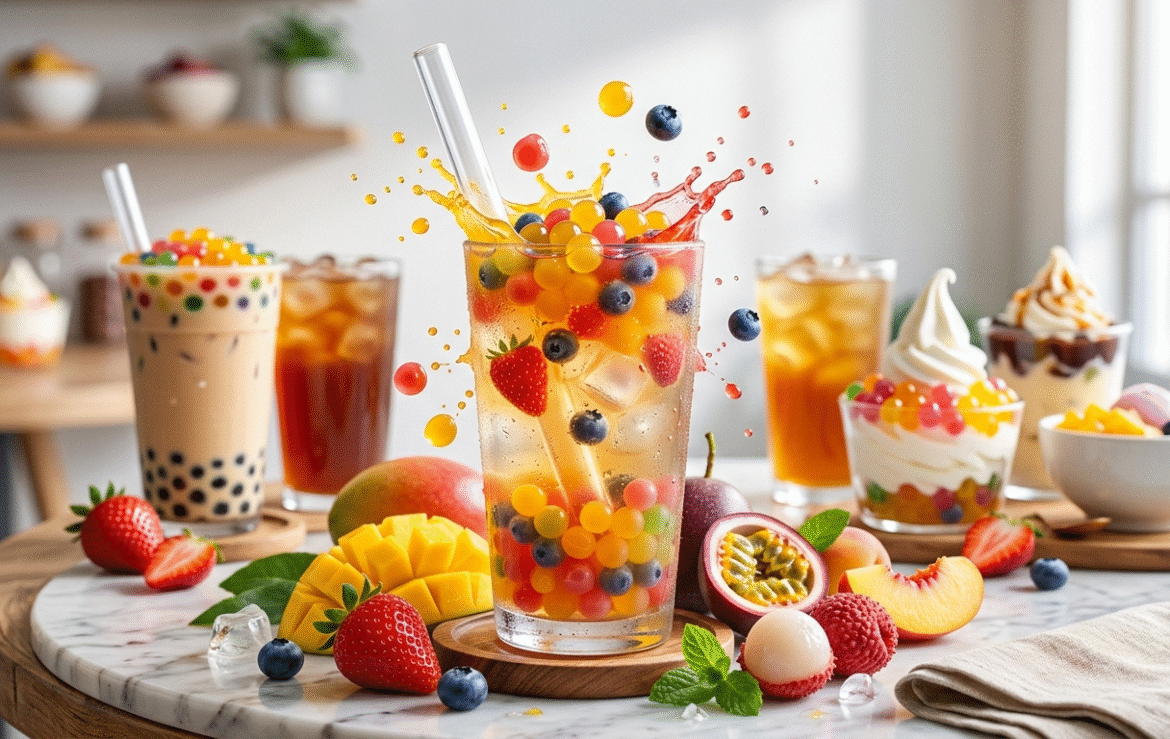
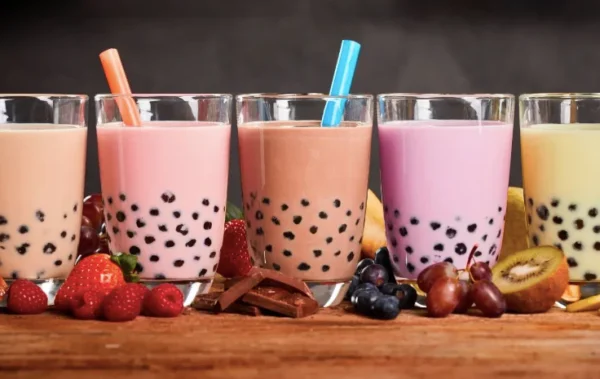
What is popping boba, and why has this colourful bubble tea topping become so popular in cafés, QSR outlets, dessert shops and homes? Popping boba consists of small, liquid-filled spheres with a thin outer membrane that bursts when bitten, releasing a sweet or fruit-flavoured liquid.
Unlike traditional tapioca pearls, popping boba is not known for a dense or chewy texture. It creates a light, juicy bursting sensation and is generally ready to serve directly from the container.
Twisty’s Popping Boba can be used in bubble tea, fruit tea, iced tea, lemonades, mocktails, coolers, milkshakes, ice cream, yogurt and desserts. Twisty Boba Ingredients supplies popping boba, tapioca pearls, beverage powder mixes and bubble tea kits for home users, cafés, restaurants, QSR brands and distributors across India.
This guide explains what is popping boba, what it is commonly made from, how commercial popping boba is produced, how to use it and how it differs from Twisty’s Tapioca Pearls.
What Is Popping Boba? Quick Answer
What is popping boba? Popping boba, also called bursting boba, popping pearls or juice balls, is a small beverage and dessert topping with a thin gel-like outer layer surrounding a liquid centre.
When the outer membrane is bitten or pressed, it breaks and releases the liquid inside. Depending on the product, the centre may contain a fruit-flavoured, coffee-flavoured, chocolate-flavoured or other speciality liquid.
Popping boba is commonly served cold or at room temperature in:
- Bubble tea
- Fruit tea
- Iced tea
- Lemonade
- Mocktails
- Coolers
- Milkshakes
- Smoothies
- Ice cream
- Frozen yogurt
- Dessert cups
Twisty’s Popping Boba is generally ready to portion and serve, making it suitable for home users as well as fast commercial beverage operations.
What Is Popping Boba Made From?
When customers ask what is popping boba made from, the exact answer depends on the specific product and flavour.
Commercial popping boba commonly includes:
- Water
- Sugar or another sweetener
- Fruit juice, flavouring or a speciality beverage flavour
- Gelling or stabilising ingredients
- Acidity regulators
- Permitted colours where applicable
- Preservatives where applicable
Many forms of popping boba use an alginate-based gel structure to create the outer membrane. Sodium alginate is a food ingredient obtained from brown seaweed and can form a gel when it comes into contact with calcium ions.
However, formulations differ between manufacturers and products. Customers should read the ingredient declaration on the exact Twisty package they are purchasing rather than assuming every popping boba flavour contains an identical formula.
The liquid centre also varies. Mango popping boba, chocolate popping boba and coffee popping boba will not necessarily have the same ingredients, nutritional values or allergen information.
How Is Popping Boba Made?
Popping boba is commonly associated with a culinary process called spherification.
In a basic spherification process, a flavoured liquid containing sodium alginate is released in small droplets into a calcium-containing solution. Calcium ions interact with the alginate and form a thin gel around the outside of each droplet.
The general process may include:
- Preparing a flavoured liquid mixture.
- Adding the required gelling or stabilising ingredient.
- Releasing controlled droplets into a calcium solution.
- Allowing a thin outer membrane to form.
- Removing and rinsing the spheres.
- Transferring the finished popping boba into a suitable storage liquid.
- Packing the product under controlled commercial conditions.
The thin outer layer keeps the liquid inside while remaining delicate enough to burst under pressure.
Commercial production requires greater control than a simple home experiment. Manufacturers must manage pearl size, membrane strength, filling consistency, flavour, colour, hygiene, storage stability and packaging.
Readers interested in the underlying food science can explore this educational explanation of popping boba spherification.
What Makes Popping Boba Pop?
The “pop” comes from the difference between the outer membrane and the liquid centre.
The exterior is strong enough to hold the sphere together during storage and serving but thin enough to break when bitten. Once the membrane breaks, the liquid filling is released immediately.
The popping sensation depends on several factors:
- Membrane thickness
- Sphere size
- Liquid filling
- Storage conditions
- Temperature
- Product age
- Manufacturing formulation
A membrane that is too thick may feel rubbery. A membrane that is too weak may break before the topping reaches the customer.
Commercial products such as Twisty’s Popping Boba are designed to provide a consistent balance between structural stability and an enjoyable bursting texture.
What Is the Difference Between Popping Boba and Tapioca Pearls?
Popping boba and tapioca pearls are both bubble tea toppings, but they are not the same product.
Twisty’s Popping Boba contains a liquid centre and bursts when bitten. Twisty’s Tapioca Pearls provide the classic soft and chewy texture associated with traditional bubble tea.
| Feature | Twisty’s Popping Boba | Twisty’s Tapioca Pearls |
|---|---|---|
| Texture | Juicy and bursts when bitten | Soft and chewy |
| Centre | Liquid-filled | Solid and starch-based |
| Flavour | Often fruit or speciality flavoured | Generally mild or sweetened after preparation |
| Preparation | Usually ready to serve | Requires cooking and preparation |
| Best drinks | Fruit tea, lemonade, mocktails and coolers | Milk tea, brown sugar drinks and creamy beverages |
| Appearance | Colourful and modern | Classic bubble tea appearance |
| Service speed | Fast portioning | Requires advance preparation |
| Best temperature | Generally cold or room temperature | Commonly used in cold or warm beverages, depending on instructions |
Choose Twisty’s Popping Boba when you want flavour, colour, convenience and a juicy bursting texture.
Choose Twisty’s Tapioca Pearls when you want traditional bubble tea chewiness, milk tea compatibility and a more substantial topping.
Many cafés stock both because they serve different beverage categories.
Is Popping Boba the Same as Bursting Boba?
Yes. The terms popping boba and bursting boba generally refer to the same category of liquid-filled spheres.
Other names may include:
- Popping pearls
- Bursting pearls
- Juice balls
- Fruit pearls
- Juice-filled boba
The terminology can vary by business, country or product listing. The important difference is not the name but the structure: a thin outer membrane containing liquid that bursts when bitten.
The word “boba” is also used more broadly for bubble tea and traditional tapioca pearls. Therefore, product descriptions should clearly specify whether the topping is popping boba or chewy tapioca pearls.
Popular Twisty’s Popping Boba Flavours
One reason popping boba is popular is the wide range of possible flavours.
Twisty’s available range may include flavours such as:
- Mango
- Strawberry
- Blueberry
- Passion fruit
- Lychee
- Orange
- Pineapple
- Coconut
- Peach
- Lemon
- Bubblegum
- Coffee
- Chocolate
- Cranberry
- Watermelon
- Green apple
- Mint
- Kala khatta
Product availability may change, so customers should check the current Twisty Popping Boba collection before ordering.
Popping Boba Flavour Pairing Guide
| Twisty flavour | Suggested pairings |
|---|---|
| Mango Popping Boba | Mango fruit tea, green tea, tropical coolers and lemonade |
| Strawberry Popping Boba | Strawberry iced tea, lemonade, vanilla shakes and desserts |
| Blueberry Popping Boba | Blueberry tea, berry smoothies, yogurt and ice cream |
| Passion Fruit Popping Boba | Green tea, sparkling coolers and tropical mocktails |
| Lychee Popping Boba | Jasmine tea, green tea, lemonade and soda |
| Orange Popping Boba | Orange coolers, citrus mocktails and iced tea |
| Pineapple Popping Boba | Tropical fruit tea, coconut drinks and soda |
| Coconut Popping Boba | Taro drinks, tropical shakes and dessert beverages |
| Coffee Popping Boba | Coffee shakes, frappes and speciality café drinks |
| Chocolate Popping Boba | Chocolate milkshakes, desserts and creamy drinks |
These are suggested applications rather than fixed rules. Cafés can test different combinations to develop signature drinks.
How to Use Popping Boba in Bubble Tea
Using Twisty’s Popping Boba is simple because it is generally ready to serve.
A basic fruit bubble tea can include:
- Brewed and chilled tea
- Fruit syrup or fruit powder
- Water or soda
- Ice
- Twisty’s Popping Boba
- A wide bubble tea straw
Place the measured quantity of popping boba in the cup. Prepare the drink separately, add ice and pour the beverage over the topping.
Popping boba can be paired with black tea, green tea, jasmine tea, oolong tea or a non-tea beverage base.
For a faster home setup, customers can explore Twisty’s Bubble Tea Kits, which combine selected ingredients for café-style preparation.
How to Use Popping Boba in Fruit Tea
Fruit tea is one of the best applications for Twisty’s Popping Boba.
A simple formula is:
- Prepare and chill the tea base.
- Add fruit syrup, concentrate or powder.
- Adjust sweetness according to taste.
- Add ice.
- Add one or two spoonfuls of Twisty’s Popping Boba.
- Serve with a wide straw.
Suggested combinations include:
- Mango green tea with Mango Popping Boba
- Lychee green tea with Lychee Popping Boba
- Peach black tea with Peach Popping Boba
- Passion fruit tea with Passion Fruit Popping Boba
- Blueberry iced tea with Blueberry Popping Boba
- Lemon iced tea with Lemon or Mint Popping Boba
Using the same flavour in the drink and topping creates a strong, familiar profile. Using two different flavours can create a mixed-fruit drink.
How to Use Popping Boba in Mocktails and Coolers
Popping boba adds colour, flavour and movement to mocktails.
It can be combined with:
- Soda
- Sparkling water
- Lemon juice
- Mint
- Fruit syrup
- Tea concentrates
- Ice
- Fresh fruit where suitable
Example mocktail ideas include:
Mango Boba Cooler
Combine mango syrup, chilled water or soda, lemon juice, ice and Twisty’s Mango Popping Boba.
Lychee Boba Sparkler
Combine lychee syrup, soda, lemon, ice and Twisty’s Lychee Popping Boba.
Strawberry Boba Lemonade
Combine lemonade, strawberry syrup, ice and Twisty’s Strawberry Popping Boba.
Passion Fruit Boba Mocktail
Combine passion fruit syrup, soda, lemon juice, ice and Twisty’s Passion Fruit Popping Boba.
For standardised café drinks, Twisty’s Powder Mix range can also be used to develop milkshakes, frappes and speciality beverages.
How to Use Popping Boba in Desserts
Popping boba is not limited to bubble tea.
Twisty’s Popping Boba can be used with:
- Ice cream
- Frozen yogurt
- Yogurt bowls
- Dessert cups
- Parfaits
- Puddings
- Smoothie bowls
- Milkshakes
- Waffles
- Selected cakes or plated desserts
Add the topping shortly before serving so its appearance and bursting texture remain enjoyable.
Because popping boba contains liquid, it should not automatically be treated like a dry decoration. Businesses should test how it behaves with each dessert and follow the product’s handling instructions.
Brightly coloured popping boba can also make simple desserts more visually attractive for café presentation, takeaway packaging and social-media photography.
Can You Put Popping Boba in Hot Drinks?
Popping boba is generally better suited to cold or room-temperature drinks.
High temperatures may soften or weaken the outer membrane, causing the spheres to break prematurely or lose their intended texture.
Suitable applications generally include:
- Iced tea
- Fruit tea
- Cold milkshakes
- Smoothies
- Lemonade
- Mocktails
- Cold coffee beverages
- Chilled desserts
Do not assume every product responds identically to heat. Follow the storage and serving directions printed on the specific Twisty package.
When developing a commercial hot drink, test a small quantity before adding it to the permanent menu.
Is Popping Boba Ready to Serve?
Commercial popping boba is generally supplied as a ready-to-serve product.
Unlike traditional tapioca pearls, it normally does not require:
- Boiling
- Resting after cooking
- Sweetening after preparation
- Texture monitoring during a short cooked holding period
The required process is usually limited to opening the container, using a clean utensil, measuring the portion and adding it to the prepared drink or dessert.
This convenience makes Twisty’s Popping Boba useful for:
- QSR outlets
- Café counters
- Food courts
- Kiosks
- Cloud kitchens
- Events
- Catering operations
- Home preparation
Always follow the serving and handling instructions printed on the product packaging.
Is Popping Boba Vegan?
Popping boba may be suitable for a vegan diet when its formulation contains plant-derived and vegan-compatible ingredients.
However, it is not safe to claim that every popping boba product or flavour is automatically vegan. Flavours, colours, processing aids and other ingredients may differ.
Customers following a vegan diet should:
- Read the full ingredient list
- Check the package for a vegetarian or vegan declaration
- Look for relevant certification or symbols
- Contact Twisty when clarification is required
The same caution applies to flavours such as chocolate, coffee, cream or speciality dessert variants, as their formulas may differ from standard fruit flavours.
Does Popping Boba Contain Allergens?
Allergen information depends on the exact product.
Many fruit-flavoured variants may not contain common ingredients such as milk, wheat or nuts, but that cannot be assumed for every flavour or manufacturing environment.
Customers with allergies should check:
- The ingredient declaration
- Allergen statements
- May-contain warnings
- Manufacturing information
- Product-specific packaging
Businesses serving customers should retain the packaging and product information for each flavour so staff can answer questions accurately.
Never use a general blog article as a replacement for the allergen statement printed on the Twisty product.
Is Popping Boba Gluten-Free?
Some popping boba products may be made without gluten-containing ingredients. However, the suitability of a specific product for someone with coeliac disease or a serious gluten allergy depends on its ingredients, processing and cross-contact information.
Customers should check the exact label or obtain confirmation regarding the specific Twisty product.
This is particularly important for speciality flavours, dessert-inspired products and products processed in facilities handling other ingredients.
Popping Boba Nutrition and Sugar
The nutritional content of popping boba varies according to:
- Flavour
- Sweetener level
- Juice or flavouring formulation
- Serving size
- Storage liquid
- Brand and product recipe
Popping boba is generally used as a sweet beverage or dessert topping rather than as a major source of protein, fibre or essential nutrients.
Customers monitoring sugar, calories or specific ingredients should use the nutrition panel on the exact product package.
Cafés should also standardise the amount added to each cup. Controlled portions help manage drink cost, sweetness and nutritional consistency.
Avoid using one online calorie estimate for every popping boba flavour because different products can have different formulations.
How Much Popping Boba Should You Use?
The appropriate portion depends on the cup size, drink recipe and desired price point.
A business should test portions for:
- 350 ml cups
- 500 ml cups
- 700 ml cups
- Dessert cups
- Yogurt servings
- Ice cream portions
Too little topping may feel disappointing. Too much may overpower the beverage, increase sweetness or make the drink difficult to consume.
A standard measuring spoon or portion scoop helps staff prepare consistent drinks.
The portion should also leave enough space in the cup for tea, ice and other ingredients.
How Should Popping Boba Be Stored?
Storage requirements vary by product, packaging and whether the container has been opened.
Follow the instructions printed on the Twisty package regarding:
- Storage temperature
- Refrigeration after opening
- Best-before date
- Time allowed after opening
- Keeping the pearls submerged
- Protecting the product from contamination
- Closing the container securely
Use a clean, dry or otherwise suitable food-service utensil according to the product-handling instructions.
Commercial outlets should record the opening date on the container and use stock according to a first-in, first-out system.
Food businesses operating in India should also follow applicable requirements and guidance issued by the Food Safety and Standards Authority of India.
Can You Make Popping Boba at Home?
It is possible to create small liquid-filled spheres at home using a spherification kit, sodium alginate, a calcium ingredient, suitable liquid and a dropper.
However, homemade spherification is not the same as manufacturing commercial popping boba.
Home results may vary in:
- Sphere size
- Membrane strength
- Flavour
- Shape
- Storage life
- Food safety
- Consistency
Factors such as liquid acidity, ingredient concentration and contact time can affect the result.
Homemade spheres are most suitable as a culinary experiment for immediate consumption. For consistent bubble tea service, Twisty’s commercially prepared Popping Boba is more convenient and does not require customers or café staff to perform the spherification process.
Why Cafés and QSR Brands Use Twisty’s Popping Boba
For commercial businesses, the answer to what is popping boba includes more than its physical structure. It is also a versatile menu ingredient.
Twisty’s Popping Boba can help businesses:
- Add new beverages without installing cooking equipment
- Reduce preparation steps
- Improve service speed
- Introduce colourful drinks
- Offer multiple flavour combinations
- Create premium topping upgrades
- Train staff more easily
- Expand into desserts and mocktails
- Serve consistent portions
- Build seasonal menus
A café can use the same flavour across fruit tea, soda, lemonade, milkshakes and desserts.
For example, Twisty’s Mango Popping Boba could support a mango fruit tea, mango cooler, mango lemonade and mango dessert cup.
Popping Boba Menu Ideas for Businesses
A small commercial menu can begin with a few versatile flavours.
Fruit Tea Menu
- Mango Popping Boba Green Tea
- Lychee Popping Boba Iced Tea
- Passion Fruit Boba Cooler
- Strawberry Boba Lemonade
- Peach Popping Boba Black Tea
Mocktail Menu
- Mango Boba Fizz
- Lychee Lemon Sparkler
- Blueberry Boba Soda
- Green Apple Boba Cooler
- Orange Mint Mocktail
Dessert Menu
- Vanilla Ice Cream with Blueberry Popping Boba
- Mango Yogurt with Mango Popping Boba
- Chocolate Shake with Chocolate Popping Boba
- Coffee Frappe with Coffee Popping Boba
- Strawberry Dessert Cup with Strawberry Popping Boba
Businesses can combine Twisty’s toppings with Twisty’s Powder Mixes to build a larger drink menu.
What Should a New Bubble Tea Business Stock?
A beginner bubble tea operation can start with:
- A black tea or green tea base
- Milk or creamer
- Two or three Twisty Popping Boba flavours
- Twisty’s Tapioca Pearls
- Fruit syrups or concentrates
- Twisty’s Powder Mixes
- Sweetener
- Ice
- Clear cups
- Wide bubble tea straws
Use Twisty’s Popping Boba for fruit tea, lemonade and mocktails.
Use Twisty’s Tapioca Pearls for classic milk tea, brown sugar drinks and creamy beverages.
Stocking both allows a business to serve customers who prefer modern fruity drinks as well as customers who want traditional chewy bubble tea.
Where Can You Buy Popping Boba in India?
Home users, cafés, restaurants and beverage brands can explore Twisty’s Popping Boba range.
Twisty offers popping boba for applications such as:
- Bubble tea
- Fruit tea
- Mocktails
- Lemonades
- Milkshakes
- Iced beverages
- Ice cream
- Desserts
Customers looking for complete home-preparation options can explore Twisty’s Bubble Tea Kits.
Cafés, restaurants, QSR chains, hotels and distributors requiring larger quantities can submit a Twisty bulk-order enquiry.
For questions about available flavours, pack sizes, samples or commercial supply, businesses can contact Twisty Boba Ingredients.
Why Choose Twisty Boba Ingredients?
Twisty Boba Ingredients is an Indian bubble tea ingredients brand and supplier serving home users and commercial beverage businesses.
Twisty’s product categories include:
- Twisty’s Popping Boba
- Twisty’s Tapioca Pearls
- Twisty’s Powder Mixes
- Twisty’s Bubble Tea Kits
- Fruit tea ingredients
- Milk tea ingredients
- Beverage premixes
- Bubble tea supplies
Twisty’s Popping Boba is suitable for businesses that need colourful, ready-to-serve toppings for fruit-based drinks and desserts.
Twisty’s Tapioca Pearls are suitable for businesses that want the traditional soft and chewy bubble tea experience.
Twisty’s Powder Mixes can help cafés develop milkshakes, frappes, milk teas and speciality beverages using standardised recipes.
Visit Twisty Boba Ingredients to explore available product categories.
What Is Popping Boba? Final Answer
What is popping boba? It is a liquid-filled bubble tea and dessert topping with a thin outer membrane that bursts when bitten.
It differs from traditional tapioca pearls in texture, flavour, preparation and menu application.
Choose Twisty’s Popping Boba when you want:
- A juicy bursting texture
- Fruit or speciality flavours
- Colourful presentation
- Ready-to-serve convenience
- Fast beverage preparation
- Toppings for fruit tea, mocktails and desserts
Choose Twisty’s Tapioca Pearls when you want:
- A soft and chewy texture
- Traditional bubble tea
- Milk tea compatibility
- Brown sugar drinks
- Classic café-style beverages
For a complete menu, cafés and QSR brands can stock both Twisty’s Popping Boba and Twisty’s Tapioca Pearls.
Frequently Asked Questions About Popping Boba
What is popping boba?
Popping boba is a small liquid-filled beverage or dessert topping with a thin outer membrane that bursts when bitten.
What is popping boba made from?
Its exact ingredients vary by product. It commonly contains water, sweetener, flavouring or juice and ingredients that create or stabilise the gel-like outer membrane. Check the specific product label for the complete formula.
Is popping boba made from tapioca?
No. Traditional tapioca pearls are starch-based and chewy. Popping boba has a liquid centre surrounded by a thin outer membrane.
Does Twisty’s Popping Boba require cooking?
Twisty’s Popping Boba is generally ready to serve. Follow the preparation and handling instructions printed on the specific package.
Can popping boba be used in hot drinks?
Popping boba is generally better in cold or room-temperature drinks because high temperatures may weaken its membrane.
Is popping boba vegan?
Some products may be vegan-compatible, but customers should check the ingredients and declarations on the specific product rather than assuming every flavour is vegan.
Is popping boba gluten-free?
Some popping boba may be made without gluten-containing ingredients. Check the specific label and cross-contact information when gluten avoidance is medically necessary.
How long does popping boba last after opening?
The period varies by product and storage conditions. Follow the instructions and after-opening guidance printed on the Twisty package.
Does popping boba need refrigeration?
Storage instructions vary. Check whether the specific Twisty product requires refrigeration before or after opening.
Can popping boba be used in desserts?
Yes. Twisty’s Popping Boba can be served with ice cream, yogurt, milkshakes, dessert bowls and selected chilled desserts.
Which popping boba flavour is best?
The best flavour depends on the drink. Mango, strawberry, lychee, blueberry and passion fruit work well with fruit teas, while coffee and chocolate variants can complement shakes and dessert drinks.
Where can I buy popping boba in bulk?
Cafés, QSR brands, restaurants, hotels and distributors can submit a bulk-order request through Twisty Boba Ingredients.
3 Comments