No products in the cart.
Bubble Tea Ingredients Every QSR Brand Should Stock
Quick Answer
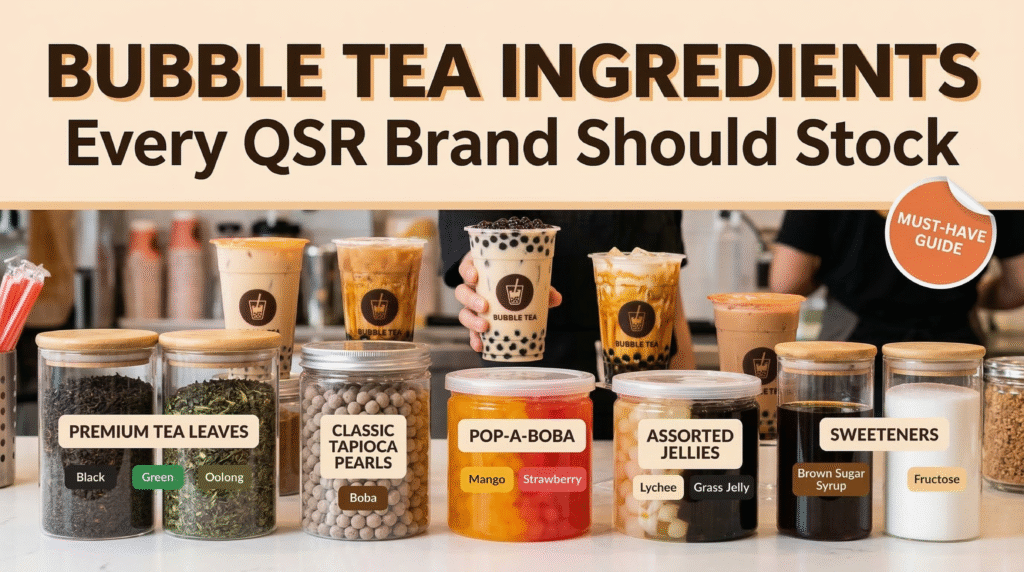
A QSR brand planning to serve bubble tea should stock tea bases, tapioca pearls, popping boba, milk or creamers, sweeteners, syrups, and essential serving accessories like cups, straws, and sealing lids. These ingredients form the foundation of most bubble tea menus and allow restaurants to create fruit teas, milk teas, mocktails, and specialty drinks quickly.
For quick-service restaurants (QSRs), choosing ingredients that are easy to prepare, consistent in taste, and scalable for high demand is essential.
Who This Guide Is For
This guide is useful for:
- QSR chains adding bubble tea to their beverage menu
- café brands expanding drink offerings
- restaurant owners launching bubble tea drinks
- cloud kitchens building a beverage category
- food entrepreneurs starting a boba drink concept
- beverage brands sourcing ingredients in bulk
Why Bubble Tea Works Well for QSR Brands
Bubble tea is becoming a popular menu addition for quick-service restaurants because it:
- has high profit margins
- allows easy menu innovation
- attracts younger consumers
- works well for takeaway and delivery
- pairs with desserts, snacks, and meals
With the right ingredients stocked, QSR brands can quickly create multiple drink variations from a small ingredient base.
Core Bubble Tea Ingredients Every QSR Brand Should Stock
The most efficient bubble tea menu is built around a few versatile ingredients.
1. Tea Base
Tea is the foundation of most bubble tea drinks.
Common tea bases include:
- black tea
- green tea
- jasmine tea
- oolong tea
These teas are used to prepare:
- milk tea
- fruit tea
- iced tea beverages
- specialty drinks
For QSR operations, tea premixes or concentrated tea bases are often preferred because they ensure consistency and speed.
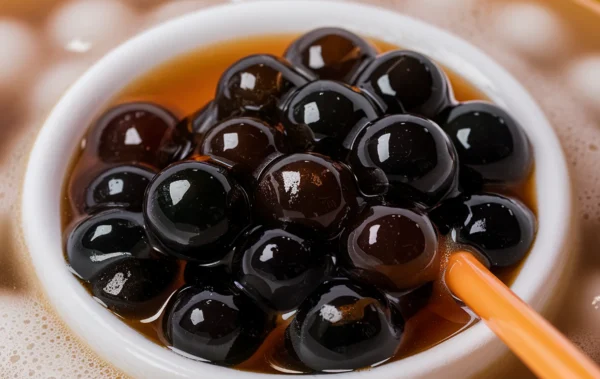
2. Tapioca Pearls (Classic Boba)
Tapioca pearls are the traditional topping used in bubble tea.
They are known for their:
- chewy texture
- neutral taste
- compatibility with milk tea
Tapioca pearls are typically used in:
- classic bubble tea
- brown sugar milk tea
- creamy milk tea drinks
QSR brands that want to serve authentic bubble tea experiences usually include tapioca pearls on their menu.
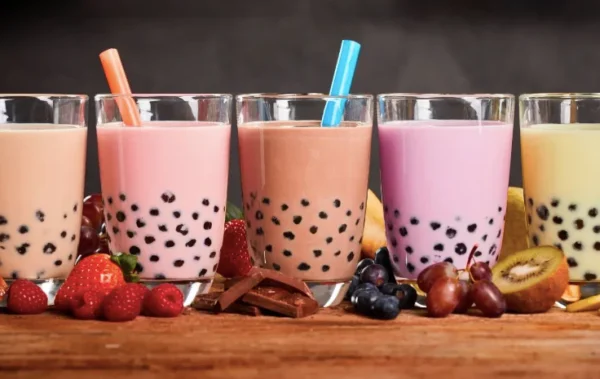
3. Popping Boba
Popping boba is a fruit-filled topping that bursts when bitten.
It is commonly used in:
- fruit teas
- lemon drinks
- mocktails
- iced beverages
- dessert drinks
Popular flavors include:
- mango
- strawberry
- blueberry
- lychee
- passion fruit
For QSR brands, popping boba is valuable because it is ready to serve and requires no cooking.
4. Milk or Creamer
Milk or non-dairy creamer creates the creamy base for milk tea.
Options include:
- fresh milk
- milk powder
- dairy creamer
- plant-based creamers
These ingredients help create drinks such as:
- classic milk tea
- brown sugar bubble tea
- taro milk tea
- matcha milk tea
For QSR environments, powdered creamers or premixes are often easier to manage.
5. Sweeteners
Sweeteners balance the bitterness of tea and enhance drink flavor.
Common sweeteners used in bubble tea include:
- simple syrup
- brown sugar syrup
- honey
- fructose syrup
Sweeteners allow QSR brands to customize sweetness levels for different drinks.
6. Flavored Syrups
Flavored syrups are used to create a wide variety of bubble tea drinks.
Popular flavors include:
- mango
- strawberry
- peach
- passion fruit
- lychee
- blueberry
With just a few syrups, QSR brands can create dozens of drink combinations.
7. Fruit Powders or Premixes
Fruit powders and premixes simplify beverage preparation.
They are commonly used to create:
- fruit milk teas
- smoothies
- milkshakes
- iced beverages
Premixes are especially useful for QSR brands because they:
- reduce preparation time
- maintain consistent taste
- simplify staff training
8. Ice and Water
While simple, ice is an essential ingredient for bubble tea.
Most drinks require:
- crushed ice
- cube ice
Ice helps maintain the refreshing texture of beverages and is critical for iced drinks.
Essential Bubble Tea Accessories for QSR Brands
Besides ingredients, QSR brands also need proper serving accessories.
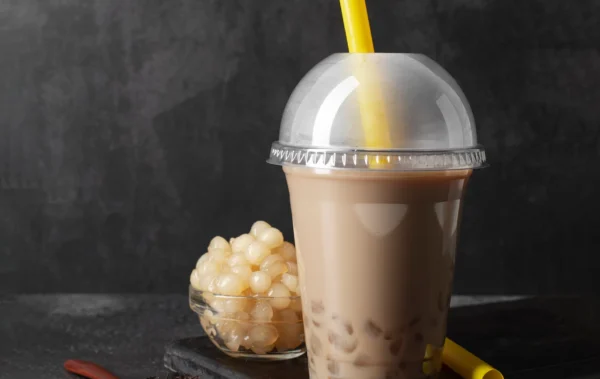
1. Bubble Tea Cups
Bubble tea cups are usually larger than regular drink cups and allow room for toppings.
Typical sizes include:
- 350 ml
- 500 ml
- 700 ml
Clear cups are often preferred because they highlight colorful drinks.
2. Wide Bubble Tea Straws
Bubble tea straws are wider than normal straws so customers can drink toppings like boba pearls.
These straws are essential when serving:
- tapioca pearls
- popping boba
- jelly toppings
3. Cup Sealing Lids
Many QSR brands use sealed lids for bubble tea.
Benefits include:
- spill prevention
- better takeaway experience
- improved drink presentation
Recommended Bubble Tea Menu Structure for QSR Brands
A simple QSR menu can be built using a small ingredient set.
Classic Milk Tea Section
Uses:
- tea base
- milk or creamer
- tapioca pearls
Examples:
- classic milk tea
- brown sugar milk tea
Fruit Tea Section
Uses:
- tea base
- fruit syrups
- popping boba
Examples:
- mango fruit tea
- passion fruit tea
- lychee iced tea
Mocktail Section
Uses:
- fruit syrups
- soda or tea base
- popping boba
Examples:
- mango popping boba cooler
- berry popping boba mocktail
How Many Ingredients Do QSR Brands Actually Need?
A practical bubble tea setup can run on just 8–10 ingredients.
Core ingredient kit:
- tea base
- milk or creamer
- tapioca pearls
- popping boba
- fruit syrups
- sweetener
- ice
- cups
- straws
With these ingredients, QSR brands can create 15–25 drink variations.
Why QSR Brands Should Choose Versatile Ingredients
When building a beverage menu, versatility matters.
Ingredients like popping boba and flavored syrups allow brands to create:
- fruit teas
- mocktails
- desserts
- milk teas
This helps maximize menu variety without increasing inventory complexity.
Final Thoughts
For QSR brands, bubble tea is a high-margin beverage category that can attract new customers and increase average order value.
By stocking the right ingredients — including tea bases, tapioca pearls, popping boba, syrups, milk, and essential accessories — restaurants can build a scalable bubble tea menu that works for both dine-in and takeaway.
A smart ingredient strategy allows brands to launch bubble tea quickly while maintaining consistency and operational efficiency.
FAQs
What ingredients are needed to make bubble tea?
Bubble tea typically requires tea base, milk or creamer, sweetener, toppings like tapioca pearls or popping boba, and ice.
What toppings should a QSR bubble tea menu include?
The most common toppings are tapioca pearls and popping boba because they work across milk teas, fruit teas, and specialty drinks.
Is popping boba easier for QSR operations?
Yes. Popping boba is ready to use and does not require cooking, which makes it easier for fast-service beverage preparation.
Why do restaurants add bubble tea to their menu?
Bubble tea helps restaurants increase drink sales, attract younger customers, and create premium beverage options.
Can a small QSR menu still offer bubble tea?
Yes. With around 8–10 core ingredients, a QSR brand can build a bubble tea menu with many drink variations.